After having picked up various passengers the two cars left Nottingham at about 8.15 am and we made our way to Whisby Nature Park near Lincoln for 9.15 am were we met up with Jack Driver. The early rain that fell on Nottinghamshire was now falling on Lincolnshire so we donned our waterproofs and set off to find our target bird of the day – Nightingale.
According to the sightings board there were six singing males on the site. Looking on the nearest lake Pete found a pair of Little Ringed Plovers changing over nest duties while in the background a Nightingale was singing. A Sparrowhawk shot past the group so fast that not all of us managed to see it. We looked for the singing Nightingale without success so it was decided to go to the area where I had seen them on previous visits.
Having turned the corner at the northern end of Coot Lake we were deafened as one was singing very close to the path and it wasn’t long before Pete had found it. What a stunning bird – in full view. The problem was that not all the group had seen it and nobody had brought a camera as it was thought that they would only be heard and not seen.
We moved on, hearing three or four more before Pete again located one competing with a very high pitched Grasshopper Warbler, that not all the group could hear, and a Garden Warbler. The Nightingale was about 50 metres away over the railway. After watching the Nightingale I decided that I would leave the group and see if I could see or hear the Grasshopper Warbler on my own. I managed, after a few minutes, to get a short snatch of its song before the Nightingale drowned it out again. We made our way back to the car park, the sun shining now. Three Nightingale were seen with at least a further five heard.
With the trip list now standing at 26 we said our goodbyes to Jack Driver and made our way to RSPB Frampton near Boston, seeing Red-legged Partridge and Hare on the way.
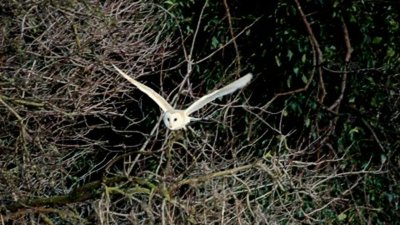
The first birds seen at Frampton were a pair of Black Swans, obviously escaped from a collection but seemed to be doing well in the wild. We were surprised to see that the Brent Geese were still in the area as we had expected them to have gone to their breeding grounds by now. After a break for lunch and a cuppa we set off down the path towards the hides. On a small tree a Corn Bunting was singing while a Whimbrel was seen to land on the wet meadow. Steve spotted a Stoat as it ran from the meadow and over the road – our second mammal of the day. As it tried to rain again we made our way towards the first hide but stopped again as a photogenic Corn Bunting sat on a post for us. As we were about to go into the hide several Twite were seen on the wires. In all we counted 15. We were told that during the winter there were several hundred on the reserve. Also seen from the hide were two White Wagtail, Ruff and Black-tailed Godwit. Meadow Pits were singing as we left the hide to go back to the cars. Jackie spotted a female Wheatear on a fence post. From the car park I looked at the Barn Owl box through my binoculars and thought I saw part of the face of the Barn Owl. Sure enough as soon as a telescope was trained on the box the head of the bird could be seen. We were doing well as we had seen 63 species on the day.
We made our way north of Boston to Freiston RSPB reserve. Upon arriving we noticed a Pale-bellied Brent Goose in among the Dark-bellied. Although only a sub-species I would not be surprised if it is not split in a few years time to be a species in its own right.
We made our way to the sea wall as high tide was due at about 4.00 pm. The tide didn’t cover the marsh but birds were being moved all the while giving reasonable views of Knot, Eider, Curlew and Grey Plover. A Peregrine was seen as were two Fulmar. Near the car park the fields were scanned and Jackie spotted a fairly distant Yellow Wagtail.
Overall 81 bird species were seen taking the year’s list to 137 compared with 102 this time last year. The mammal list is at 6 (5 in 2009). Only one butterfly has been seen that of a Large White. This time last year 8 had been seen.