A large finch and bunting flock has formed at the dry end of the Slurry Lagoon, mostly consisting of Reed Buntings and Goldfinches but also containing a few Green Finches and Chaffinches, with one male Brambling. Also present were a few Meadow Pipits. On the Slurry Lagoon a Redshank was present early on and later five Egyptian Geese flew in and at least one Pintail is still present. Two Peregrines, probably both males, flew over calling loudly, one making occasional stoops at the other, talons outstretched. Also seen were two Redpoll and two small flocks of Redwings. PS.
Tag Archives: Slurry Lagoon
Brambling – 18th October
Wheatear – 6th October
The Patchwatch was held today and there were definite signs of passage as Skylarks, Meadow Pipits, Swallows, Song Thrushes and the first Redwings flew through. The Jack Snipe was still by the seat on the Causeway and a Wheatear was seen perched on the seat by the river steps. On the Slurry Lagoon there were still three Pintail and a Red-crested Pochard. Butterflies were about too with Brimstone, Red Admiral, Comma, Small Tortoiseshell and a very late Meadow Brown. Over 70 species of bird were seen during the day. PS.
Jack Snipe – 29th September
A Jack Snipe was present on the Slurry Lagoon this morning, in front of the bench. The Bittern was still giving short views as it flew across the lagoon and a Little Egret, ringed at Bestwood, was also present. There were also four Pintail and a Red-crested Pochard. RW.
Black Swan – 27th September
This afternoon a Black Swan settled on the Slurry Lagoon. There were also five Ringed Plover, three Dunlin, a Greenshank and thirteen Common Snipe. RW.
Bittern – 25th September
A Bittern flew across the Slurry Lagoon early in the afternoon. Also present were two Pintail, twelve Snipe and two Cetti’s Warblers. RW.
Speckled Bush-cricket – 24th September
There are still some Speckled Bush-crickets to be found along the back of the Boundary Hedge beneath the willows, near the river, on the nettles. On the Slurry Lagoon there are still three Pintails and there was also a Greenshank and a Green Sandpiper. PS.

Bittern – 22nd September
At about midday a Bittern was seen flying across the Slurry Lagoon, dropping into the reed bed to the right of the Causeway bench. As one had been seen earlier dropping in at the same spot it might mean there are two Bitterns in residence. There are now four Pintails also on the Slurry Lagoon. PS.
In the afternoon a juvenile Arctic Tern and a Hobby were seen. RW.
Pintail – 20th September
There are still three Pintail (all in eclipse/juvenile plumage) on the Slurry Lagoon. There are also still some butterflies and dragonflies about, including Comma, Peacock, Red Admiral and Brown Hawker. PS.
Cricket and Grasshopper Walks – 2013
The two walks were held on Wednesday, 14th August and Sunday, 18th August, the first day there were seven people and on the Sunday only one person turned up. The weather was bright and warm on both days and so the insects were not hard to see, although the Wednesday was rather windy.
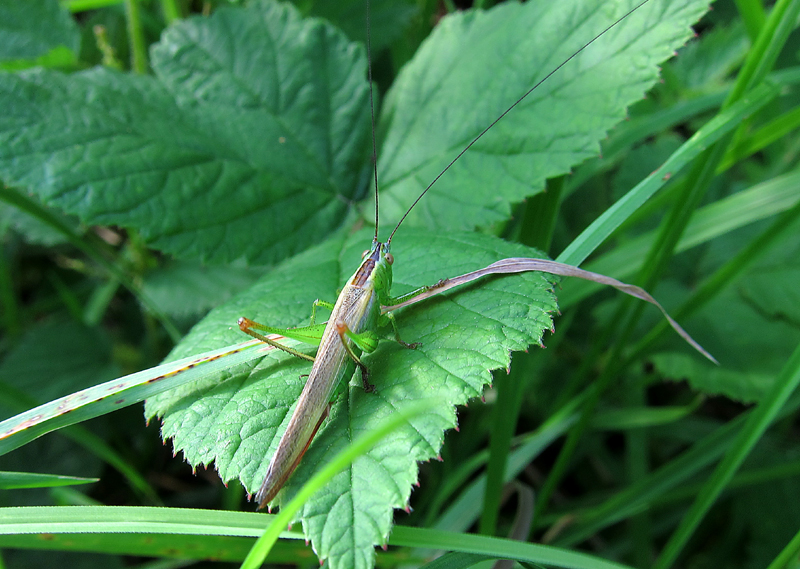
On the Wednesday the Long-winged Coneheads were plentiful and seem to have taken over most of the site and were not restricted to a few areas as they had been in the past. There were individuals of all ages, from quite early instar nymphs to fully mature adults. Many of the ones found were of the extra long-winged, macropterous, form, which is normally associated with dense populations of the insect. These are the more mobile form that it is thought spread out to colonise new areas. Also found in large numbers were Lesser Marsh Grasshoppers, which were found in a variety of colour forms. The Field Grasshoppers were much harder to find than they have been in the past, possibly due to competition with the other two orthopterans. Roesel’s Bush Cricket was not found, possibly because the blustery weather made it hard to hear, and no Slender Groundhoppers were found when we looked by the Small Gravel Pit.
On the Sunday, as there were only two of us, we decided to see what we could find on the dry end of the Slurry Lagoon. We found plenty of Long-winged Coneheads and Lesser Marsh Grasshoppers as we made our way to the Slurry Lagoon gate. Once on the slurry surface we found the missing Field Grasshoppers amongst the sparse vegetation.

Whilst looking for them we also discovered Common Groundhoppers, which were in good numbers but extremely hard to see. All sorts of colour forms and patterns were represented, but they were difficult to photograph as they kept jumping and disappearing. We again looked without success for Slender Groundhoppers by the Small Gravel Pit, but were luckier with Roesel’s Bush Crickets, which were singing along the banks of the Deep Pit.
Arctic Tern – 23rd August
This afternoon a juvenile Arctic Tern paid a brief visit to the Slurry Lagoon, as did a Yellow-legged Gull. Three Greenshank spent most of the afternoon there and there are now three Garganey. Two Clouded Yellows and a Painted Lady were also seen. PS.