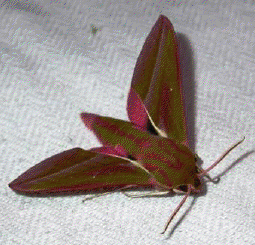
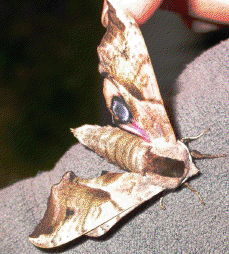
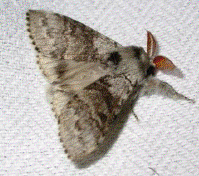
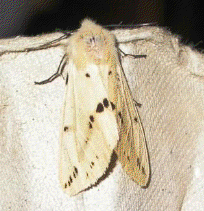
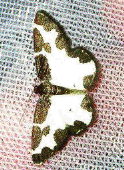
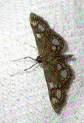
National Moth Night is a yearly event where, all over the UK, people go out and light up the sky and identify the moths in their local area. The date of the National Moth Night varies each year, as does the purpose of the night. Sometimes it targets a specific species during their flight times or a change in general distribution. This year it has been about moths and their predators: bats.
Moths, like butterflies, like to fly in warm and calm conditions. After a chilly weeks weather, Saturday had been reasonably pleasant and warm. We arrived at 8pm and the sky was clearing with a fairly strong breeze. It is always relaxing to watch the sun set to a chorus of Sedge Warblers and Cuckoo. A party of Common Tern came into roost and a Peregrine skimmed through at dusk across the Deep Pit.
We had two lights operating and decided to trap between the Slurry Lagoon and the Deep Pit. One trap on the junction between the track between the two pits and the outer path and the other a little along the track between the two pits. Lights went on about 9:10 and activity was slow at first, although three to four Noctule Bats hunted over the Slurry Lagoon. While I stayed with the equipment the group walked to the River Trent where Daubenton’s Bats and probably Soprano Pipistrelle Bats were feeding.
Before long the first moth appeared, luckily caught as it was just about to disappear. A lovely fresh Waved Umber, whose food-plant is Privet and Lilac. Then came the very variable Shuttle-shaped Dart with Rusty Shoulder Knot. A lovely male Pale Tussock was then followed by a cracking fresh Mullein Moth. This species feeds on Mullein and Figwort. Then came a fresh Green Carpet and the dashingly dark Spectacle, a moth you need to look head on at to see its large two pale disks below a quiff of hairs!
Activity around new Robinson trap had appeared to be quiet but to our delight, sitting just below the bulb was the star moth of the night, a lovely female Emperor Moth, the UK’s largest moth. Although the caterpillars have been found in the past, until now, no one had seen the adult. Camera phones were used to capture this event.
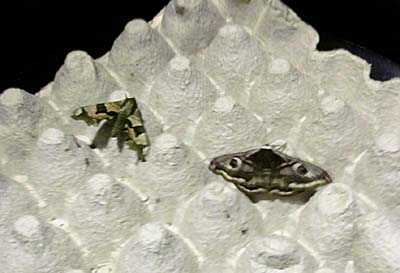
Although only a few yards away the Robinson trap yielded completely new moths. In addition to the Emporer Moth, a stunning male Lime Hawkmoth, a lovely Pebble Prominent and a Flame Shoulder.
At midnight the group made its way home under the stars to the back drop of a reeling a Grasshopper Warbler, all very satisfied at seeing this new aspect of Netherfield Lagoons.
As we have new mothing gear I hope to arrange a number of mothing evenings throughout the year and I hope members and their friends and family will join us. All you need is a torch, warm clothing and seat to sit on. As it’s important to choose the right evenings, I will post the nights up on the website a day or two before, so please keep your eyes open. If you don’t have internet access but would like to come let me know your phone number and I will phone you beforehand. You can contact me on 9893197.
Look forward to seeing you there. Craig Howat.