A Little Gull has spent most of the day catching small flying insects over the Slurry Lagoon, later on joined by Black-headed Gulls. In the shallow water in front of the reeds were also four Black-tailed Godwits.
Tag Archives: birds
Warbler Numbers at the Netherfield Lagoons
Peter Smith
There has been a steady increase in warbler numbers at the lagoons as the vegetation has developed over the years. In 1996 the site was much more open, barren looking, with the Slurry Lagoon having only small reedy patches to relieve the blackness of the coal slurry. The bramble and hawthorn scrub patches were in their infancy and did not provide a deal of cover, with lots of bare earth still showing on the Deep Pit banks.
Nine species of warbler are regularly recorded breeding on the site, being Grasshopper Warbler, Sedge Warbler, Reed Warbler, Lesser Whitethroat, Whitethroat, Garden Warbler, Blackcap, Chiffchaff and Willow Warbler. Other species recorded are Cetti’s Warbler, Savi’s Warbler, Great Reed Warbler, Marsh Warbler, Dusky Warbler, Wood Warbler and Goldcrest, bringing the total species to sixteen, plus Scandinavian and Siberian races of the Chiffchaff. This is quite an impressive list for a 53-hectare site.
Grasshopper Warbler
The 1999 Annual Report suggests a population of up to four pairs were occupying the site, mostly between the Large Gravel Pit and the Deep Pit bank but, as the bramble patches have developed, the territories now extend along all the slopes of the Deep Pit and along both sides of the Causeway as well as the area around the two Gravel Pits. The numbers have risen to a staggering eleven ‘reeling’ males this year. There was a dramatic drop in the middle of this period, which is not explained, with only one bird being recorded in 2003. A possible explanation could be that conditions in their wintering area in Africa could have been unsuitable due to drought.
Most Grasshopper Warbler breeding territories contain a large patch of brambles, some hawthorn scrub and coarse grass with umbellifers. The interface between the bramble and grasses is often the centre of the territory. The males rapidly set up a territory when they arrive on the site and start their reeling song to proclaim ownership of it. After about a week the females arrive and initiate peak male singing activity. There is a lot of chasing and courting as they settle in to the males’ territories and then, suddenly, life becomes much quieter with only one or two males reeling at a time.
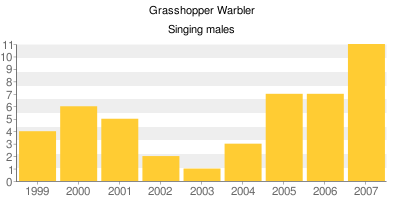
The nest is built on or near the ground in a hollow inside a tussock or other dense vegetation.
Sedge Warbler
This has always been a common species at Netherfield and suggests their territories must be quite small to fit so many in such a small site. Their erratic song is a part of the summer sound of the lagoons. Like the Grasshopper Warbler they like brambles and scrub, but those chosen often border reeds or water. After the main arrival in spring there seems to be chattering song coming from almost every bush. There is also a dip in the Sedge Warbler’s numbers but this one occurred in 2005, when there was a drought in the Sahel, their wintering ground in Africa. Numbers now seem to be picking up and also suggest an upward trend.
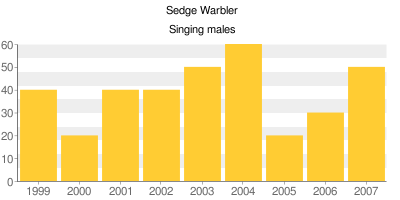
They like to build their nests in a wide variety of situations, sometimes suspended over water from several vertical stalks and sometimes on the ground under thick vegetation. Some nest well away from water and have recently started to use crops such as oil seed rape to build their nests in.
Reed Warbler
This species is almost completely dependent on the reed beds for breeding sites and, as the reed beds spread over the slurry and around the other pits, so their numbers increase. The first counts were in the region of fifteen birds but now counts are nearer twenty-five and their rhythmical songs fill the air as you walk around the Slurry Lagoon.
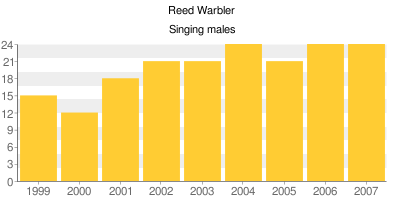
By far the commonest nest site is in a reed bed, suspended over the water by several reed stems. Even the small patches of reed in the deep pit can hold a breeding pair.
Blackcap
The preferred habitat for the Blackcap includes some mature trees and tall scrub, most of which can be found around the periphery of the site. There has been an increase in young ash trees growing around the site and some of the hawthorn scrub is quite tall, which seems to suit this warbler well. The male’s song is loud and richly musical and is generally given from the taller trees in its territory.
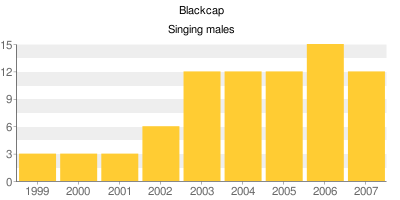
Blackcaps prefer to nest slightly higher off the ground than other warblers and may nest in a bush or on the low branch of a tree, up to eight feet from the ground.
Garden Warbler
As the tall, dense scrub on the slopes of the Deep and Slurry Pits develops, so does the favoured habitat of this species. When small gaps were made within these areas of scrub the Garden Warbler quickly moved in, showing this could be the way to increase their numbers further. The song is not as ‘fluty’ as the Blackcaps and is more ‘scratchy’ and sustained in its delivery.
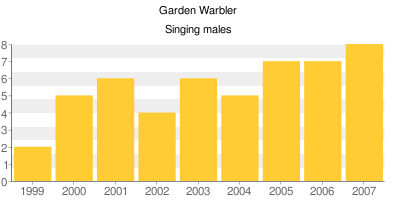
Nests are normally situated closer to the ground than the Blackcap’s, typically about a foot up in dense scrub, wedged in between supporting stems or twigs.
Lesser Whitethroat
In 1999 there were only about two pairs in the area, but now there are more birds seen each spring and there are probably nearer to four pairs, with up to eight males passing through on passage. The habitat that tempts them to stay and breed is generally where brambles grow high up against a hedge or bush and the stems hang down from the top. The pair can spend the summer in there and, without the male’s rattled song; the world could be oblivious to them.
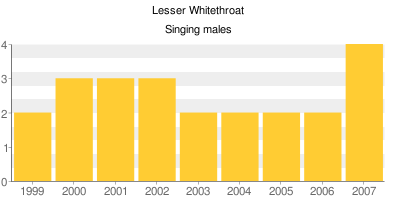
They prefer to build their nests in dense dark cover, normally a couple of feet above the ground, the dense bramble patches making an ideal site.
Whitethroat
This is another warbler that is present in large numbers on the reserve and numbers have risen as the scrubby habitat they prefer has developed. They normally make their territories where they can find bushes for song posts that are about three metres high, surrounded by nettles and hemlock or cow parsley or other rank vegetation where they can hunt for insects. They often launch themselves into the air as they deliver their song.
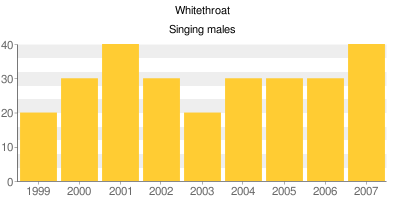
Normally the nest is built quite close to the ground in dense vegetation, but is sometimes higher in thick bushes.
Chiffchaff
The Chiffchaff prefers woodland with mature trees so we are quite lucky to have some on site. Their two-note song is sometimes performed from the power lines along the railway embankment. They are mainly along the railway line, riverbank and Boundary Hedge where the tallest trees grow, with a dense shrubby under-story. They are showing signs of increasing but two glitches, in 2002 and 2006, also show that they are still vulnerable to setbacks.
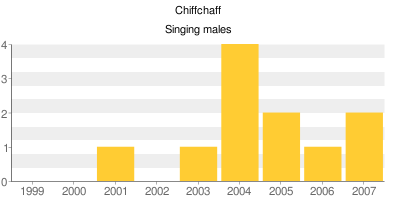
The Chiffchaff builds its domed nest close to or on the ground in rank vegetation or on a low branch, concealed by leaves.
Willow Warbler
This is another species that prefers scrub, but broken by some taller trees as well. Nationally the species is in decline but the site again manages to buck the trend and the gently descending notes of the song can be heard around most of the reserve.
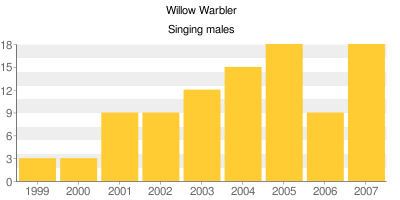
The nest is normally built on the ground or very close to it in thick cover of stems and leaves, and is domed, like the Chiffchaff’s, with an entrance towards the side.
As most of the warbler species nest on, or close to, the ground they are vulnerable to disturbance, especially by dogs, and the fences erected around the Slurry Lagoon and Deep Pit are probably also part of the reason for their recent success.
The downside to the increasing numbers of warblers is that the habitat that has developed and is encouraging them is replacing the bare muddy expanse that used to attract waders. There are just as many species of wader being recorded, as they follow the course of the river Trent and fly over the site, but not so many stop over and those noted are more likely to be individuals rather than the small groups that used to stop to feed and rest. The changes that seven years of colonisation by reeds, scrub and trees have made can be seen in the photographs reproduced as plates vii and viii. Unfortunately they were not all taken at the same time of year, but they do make the point.
References
Colin Harrison – A Field Guide to the Eggs, Nests and Nestlings of British and European Birds – Collins – 1975
Eric Simms – British Warblers – Collins / New Naturalist – 1985
Black-tailed Godwit – 26th June
A Black-tailed Godwit and a Redshank were present on the Slurry Lagoon in the afternoon. In the morning two Curlews had been reported.
Common Tern – 25th June
The first juvenile Common Tern fledged today from one of the newly installed Tern Platforms.
Green Sandpiper – 22nd June
A Green Sandpiper was present on the Slurry lagoon in the afternoon.
Gadwall Ducklings – 18th June
A Gadwall with eight ducklings was seen on the Slurry Lagoon today.
Little Tern – 14th May
A Little Tern was seen briefly, picking insects from the water surface over the Deep Pit. It looked tiny beside the breeding Common Terns.
The Birding Year at the Netherfield Lagoons
Winter (January & February)
The lagoons are a great place to start off the New Year, a refreshing walk to re-invigorate you after the holiday festivities will often be rewarded by some excellent birds. Entering the site from Teal Close you may see a flash of vivid blue as the Kingfisher zooms along the Ouse Dyke a little patience may gain you a view of this stunning bird perched along the bank. A Grey Wagtail is also often seen along the dyke, characteristically bobbing its tail and dashing along the muddy edges catching insects.
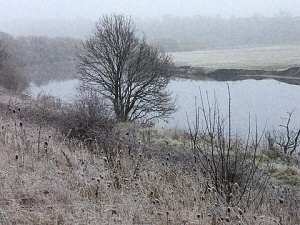 Commoner species such as Wren, Dunnock, Blackbird, Chaffinch, Blue Tit, Great Tit will be seen along the hedge often joined by a feeding party of Long-tailed Tits moving through giving their delightful contact calls whilst a Song Thrush is busy smashing snails on its ‘anvil’ under the bushes on the opposite bank.
Crossing over the footbridge on to the actual reserve take a moment to scan the fields, Pied Wagtails, Common Pheasant, Rook, Carrion Crow, Jackdaw will often be in evidence and you may also find Linnet, Yellowhammer, Lapwing, Grey Partridge and Mistle Thrush. Depending on the vegetation in the fields you may also encounter a small flock of Golden Plover hiding amongst the furrows, along with our Scandinavian winter visitors, Fieldfare & Redwing.
Around the footbridge is often a good place to see Bullfinches giving away their presence with their soft ‘phu’ calls. After climbing the steps of the slurry pit bank you should see and hear Redwings as they feed along the hedge bottoms and any Fieldfares flying over will announce themselves with their distinctive ‘schack-schack-schack’ calls. The slurry pit itself should hold good numbers of Teal, Shoveler, Gadwall, Pochard, Tufted Duck, Mallard, Coot and Moorhen with a few Little Grebe and maybe one or two Shelduck and Goldeneye. The apparently empty reed beds will actually hold several Reed Buntings which will flit down to the path edges as they feed. Along the water line, depending on the water level, you may see several Snipe as they roost or feed on the reed fringes.
A familiar sound at this time of year is the slightly alarming squeal of Water Rail which may be heard from any of the reed beds the best chances of seeing this secretive bird are when it flutters low across the water between reed beds or when it ventures out along more exposed shores to feed, especially in freezing conditions. These muddy edges may also attract waders such as Dunlin, Redshank, Common Sandpiper or Green Sandpiper.
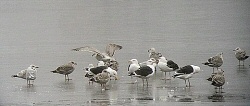
The number of gulls on the slurry lagoon varies greatly depending on the time of day and the prevailing weather conditions. After early morning groups have dispersed many drift in and out during the day as they move into the adjacent farmland or further away to feed. Mid-afternoon often sees a gathering of gulls loafing around the lagoon. The most common species is Black-headed Gull with much smaller numbers of Common Gull. The large gulls are mainly Lesser Black-backed and Herring Gulls with smaller numbers of Great Black-backed Gulls, it is always worth searching the gull flocks as Iceland, Glaucous, Yellow-legged and Mediterranean Gull have all be recorded here in the winter months.
The Deep Pit will hold similar wildfowl species to those already encountered and Great Crested Grebes with probably have one or two Cormorants fishing whilst others rest and dry their wings on top of the nearby electricity pylon. The banks of the Deep Pit may hold a few wintering Meadow Pipit and an occasional Stonechat. Walking towards the railway bank you will invariably hear the ‘yaffle’ call of a Green Woodpecker and maybe see its lime-green back as it bounds away from you. If very lucky the explosive song of the Cetti’s Warbler may be heard but sightings are much more difficult to obtain.
The path along the railway bank is usually productive and sought after species such as Redpoll, Siskin and Willow Tit can often be seen with a little patience, the latter often visiting the bird table at the bottom of the bank near the signal box.
Both Pied and Grey Wagtails are often seen around the railway bridge and Stock Doves can be seen in the fields and on the wires across the river. The fields & river also have Canada & Greylag Geese, Wigeon and a few Grey Herons with the possibility of Redshank, Oystercatcher, Goldeneye or even a Goosander.
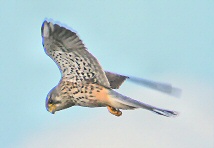
The Gravel Pits hold varying numbers of wildfowl but this is where you should see the highest numbers of Wigeon and careful searching of the Tufted Ducks may be rewarded with views of the occasional Scaup and Smew. Kestrels hunt over the grassy areas and Sparrowhawks may be encountered anywhere but especially along the hedges. A walk along the dense hedge between the fields and the gravel pits may reveal an over wintering Chiffchaff or even a Blackcap.
Spring (March/April/May)
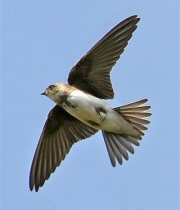
Spring is always a season of change as the leaves begin to unfurl, the first migrants and summer visitors are eagerly anticipated as the winter visitors start to drift away. Friendly competition drives the local patch regulars to spend more hours of the lengthening days in the field hoping to get the first record of the year for each species. Sand Martins are often the first to return with some passing thorough as early as the second week of March closely followed by the first early Swallows, these are often few in number and pass straight through on their journey north, the main arrival occurs in late March and early April.
Little Ringed Plovers start appearing from the third week in March and can be seen performing their aerial courtship displays throughout early spring. The warblers then start to arrive and mornings can become very noisy with Blackcap, Chiffchaff, Willow Warbler, Common Whitethroat, Sedge Warbler and Reed Warbler all singing heartily to attract a mate and declare their territory. A special treat at this time is to hear several Grasshopper Warblers delivering their reeling song from the scrub and bramble patches, before the leaves fully develop is the best time to catch a glimpse of these beautiful songsters.
The growing chorus is then joined by newly arrived Garden Warblers and Lesser Whitethroats, the latter often favouring the taller trees and bushes along the railway bank. The familiar call of the Cuckoo is heard, especially around the Deep Pit and the Gravel Pit, if you hear one search along the fence posts for the chance of a good sighting.
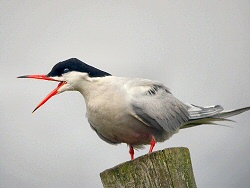
Yellow Wagtails will be found on the fields or the grass banks across the river and House Martins will be seen around the bridge as Swallows begin to nest under the bridge itself. Sand Martins begin nesting in the river bank and Common Terns will have returned to the nesting platforms on the Deep Pit.
By early May good numbers of Swifts can be seen feeding over and around the reserve and the Hobby will be putting in regular appearances as it hunts over the lagoons.
Spring is a great time to see more scarce birds pass through some are annual such as Northern Wheatear, Whinchat, Arctic Tern, Ringed Plover and Whimbrel. You may be fortunate to see some less frequent visitors such as Garganey, Marsh Harrier, Osprey, Black Tern, Little Gull and Common Redstart, anything is possible, as proven in May 2001 when a Little Swift spent 4 days feeding over the fields and lagoons and roosting overnight on the railway bridge.
Summer (June/July/August)
After the hyper activity of spring things start to calm down as we move into the summer and breeding gets fully underway with the first fledglings appearing. The reserve is taken over by the beautiful summer flowers and their attendant butterflies, damselflies and dragonflies as the days become long and lazy.
Wader species that breed in the tundra regions start to occur on return passage as early as July which may be failed breeders or juvenile birds, these may include Dunlin, Green Sandpiper, Greenshank, Wood Sandpiper, Knot, and Curlew Sandpiper. The chances of seeing any of these stop over at the lagoons largely depends on the water levels and a fair degree of good luck.
Autumn (September/October/November)
The summer visitors disappear as migration gets underway with more waders such as Black-tailed Godwit, Bar-tailed Godwit and Ruff passing through along with warblers as they head south after breeding.
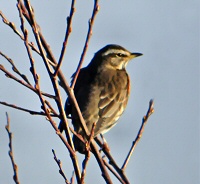
October sees the return of the first Redwings and Fieldfares which may also bring in one or two Brambling. Northern Wheatear, Whinchat, and Stonechat may be seen lingering for a few days and Siskins & Redpolls will arrive. The wildfowl numbers begin to build again and may include something a little more unusual such as a Pintail or Egyptian Goose, while careful sky watching could see the first flocks of Pink-footed Geese flying over or even a few Whooper Swans.
Winter Returns (December)
The rapidly shortening days and cold nights return as winter takes hold but there are still things to see at the lagoons as wildfowl numbers continue to grow, large concentrations of gulls form on the slurry lagoon and the fortunate visitor may catch sight of a Little Egret or even a Bittern before it disappears into the reed bed.
Nightjar Walk, 5th June
I was very pleased to see seventeen people meeting at the car park on Longdale Lane on Friday, 5th June 09 for what we hoped would be an eventful evening. Dark clouds were looming but we decided to give it a try.
Garden Warbler was singing as we left the car park and we soon added Blackcap to the list.
While walking through the woods we heard a Cuckoo – my first of the year. As somebody said – “a new record” – for me it was, the latest I had ever heard one. We stopped at a crossroads and as expected we soon saw the first of five Woodcock, or was it the same one going round in circles!
We pressed on and as expected as we got to the furthest point from the car park the heavens opened. We bravely sheltered for about 20 minutes getting wetter and wetter until at last we gave up.
Seventeen very wet and soggy people said their goodbyes in the car park but not before planning a return trip the following week.
We recorded 11 birds on the night and we added 3 birds to the trip list that now stands at 119 for the year.
Report by Philip Burnham
Goyt Valley, Sunday, 24th May
Eleven of us met at the car park in the Goyt Valley, one of the best turn outs for a while. The weather looked promising after a wet and windy week.
From the car park the song of Common Redstart could be heard and it wasn’t long before it was spotted and we all got onto it. Spotted Flycatcher was also seen from the car park along with commoner species.
We started the walk up the valley road and it wasn’t long before Pied Flycatcher was seen – the first of over a dozen seen on the day. With 20 birds on the list including 2 target birds we continued up the valley to a path that took us nearer the stream. Tree Pipit and Raven were seen on this stretch although some of us missed the Ravens.
The surprise along this stretch was two bats that we seem to think were Daubenton’s. They were seen by most of the group skimming over the water looking for insects.
Upon returning to the road it was not long before we had superb views of Dippers taking food to their nest near by. The first of 6 -7 Painted Lady butterflies were seen along with many Orange Tip and Green-veined Whites.
It wasn’t long before someone said they could hear Grasshopper Warbler. We stopped and listened and soon all the group could hear it. This was unexpected bird as we were above the tree line and now on the open moorland.
Reaching the car park at the top of the road Whinchat was seen and heard at the top of a conifer, 3rd target bird.
After a short stop for lunch we continued up the hill with a very fine breeze and full sun. Meadow Pipits were everywhere so it was really no surprise when a Merlin was spotted sitting on a wall.
Turning off the track onto the moorland we passed a pair of agitated Curlew that obviously had young with them, their haunting calls carrying down the valley.
Red Grouse were eventually seen but distant. On the way down the narrow path three Green Hairstreak butterfly were seen on a Bilberry bush. Although there were bilberry all over the moorland, these were the only green hairstreak seen.
We returned to the road, crossed it and walked through a conifer plantation looking for an area were Black Grouse could be seen but to no avail.
After a pleasant break near to where we had seen the dippers, we took a leisurely walk down the hill back to the car park. Just before the car park a pair of Common Lizards were seen basking on the reservoir wall.
It had been a beautiful, hot sunny day in good company.
13 species of birds were added to the year’s tally that now stands at 115.
The Lizard was the first reptile of the year while we added 2 more butterflies to the tally of 10. The only mammals seen on the day were the bats and, surprisingly, we have not yet recorded any dragonflys.
Report by Philip Burnham